

September 24, 2026
Thanks to enzyme-based biocatalysis, an enormous range of pharmaceutical active ingredients and other complex molecules can be synthesized in an environmentally friendly manner. Researchers at the Karlsruhe Institute of Technology (KIT) have now developed a technology that allows to assemble enzymes into millimeter-sized, storable beads. In this process, the enzymes not only act as catalysts but also constitute the beads’ material itself. In a further variant, the enzyme networks can be combined with living cells. A patent application has been filed for the technology. The results have been published in Advanced Materials. (DOI: 10.1002/adma.75120)
Press Release 080/2026
September 23, 2026
Professor Stefan Bräse of KIT is one of the 20 award recipients in 2026 to be recognized for their commitment to entrepreneurship and university spin-offs.
To ensure that scientific findings are translated into practical applications as quickly as possible, academic spin-offs play a crucial role. In recognition of his longstanding commitment to start-up creation and entrepreneurship, Professor Stefan Bräse of Karlsruhe Institute of Technology (KIT) received the UNIPRENEURS award in Berlin on September 22, 2026. It is considered the highest honor for exceptional dedication to fostering university spin-offs.
Read more
September 16, 2026
Artificial intelligence (AI) and digitalization are driving rapidly growing demand for ever-faster and more powerful data connections. Researchers at Karlsruhe Institute of Technology (KIT) have developed a 3D printing process that enables tiny optical components used for data transmission to be connected with high precision and efficiency. The process enables the automated mass production of optical transmitters and receivers. For this innovation, the researchers were nominated for the German President’s Zukunftspreis on September 16, 2026.
Press Release 079/2026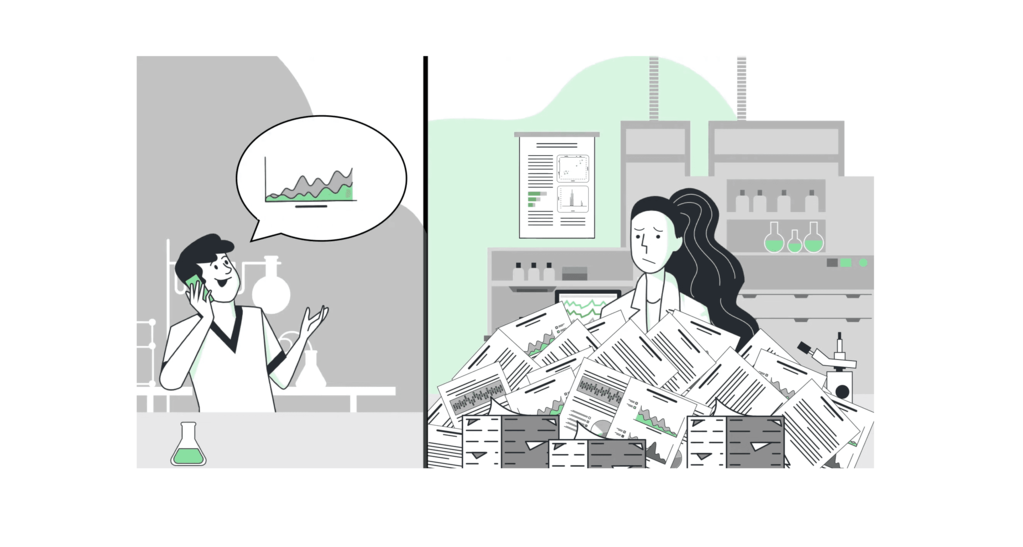
The Chemotion Electronic Lab Notebook (ELN) has been honored with the Helmholtz Software Award 2026 in the category Scientific Originality Prize (Main Award, €5,000). Developed at the Karlsruhe Institute of Technology (KIT) under the leadership of Dr. Nicole Jung, Chemotion ELN supports FAIR (Findable, Accessible, Interoperable, Reusable) data management in chemistry and related sciences.
The award recognizes Chemotion’s innovative approach to digitalizing research workflows. The open-source platform enables seamless documentation, collaboration, and data sharing, advancing reproducibility in science.
Read more
September 03, 2026
Two early-career researchers from Karlsruhe Institute of Technology (KIT) have been successful in the latest call for Starting Grants from the European Research Council (ERC): In the COOLWEAVE project, Dr. Jingyuan Xu is developing a climate-friendly cooling technology. In the DATAARK project, Dr. Maryia Rusak is investigating how a classification system for building information developed across Europe after the Second World War and influenced major architectural projects. The two five-year projects will each receive EUR 1.5 million in funding.
Press Release 077/2026
August 28, 2026
Fridges, A/C systems, and datacenters consume enormous amounts of electricity and the cooling demand is constantly on the rise. A team of research from the Karlsruhe Institute of Technology (KIT) and the University of Tsukuba in Japan is now presenting a new approach substantiated by a prototype where heat assumes the role formerly taken by an electric motor. Two ultra-thin shape-memory films interact to convert thermal energy into mechanical work in a first step and finally into measurable cold. Their work opens up new possibilities for the future use of waste heat and solar energy for solid-state cooling. The results have been published in Nature Energy. (DOI: 10.1038/s41560-026-02122-6)
Press Release 075/2026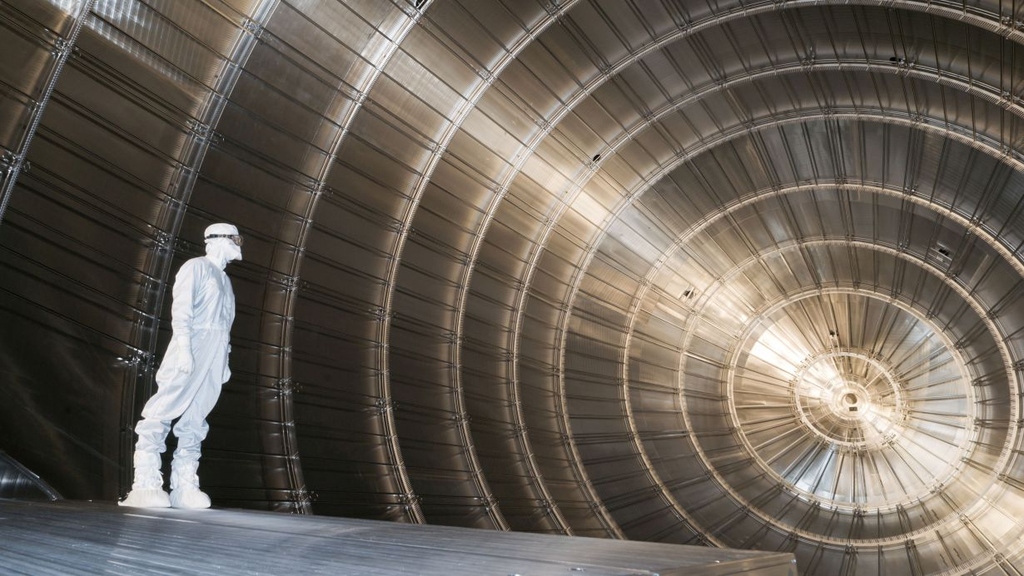
July 30, 2026
Research data is the basis of scientific knowledge. However, valuable measurement results often remain unused after a project has ended or can hardly be related to data from other disciplines. The National Research Data Infrastructure (NFDI) sets standards and creates services so that researchers from different disciplines can easily find and reuse data. Knowledge is no longer lost, but can be incorporated into new research projects. This is why the German federal and state governments have decided to fund the ten consortia involved in the second NFDI funding round with roughly EUR 71 million until the end of 2028. The Karlsruhe Institute of Technology (KIT) participates in five of these consortia that manage data from individual disciplines.
Press Release 069/2026
July 16, 2026
Directed rotational motion is widespread in nature and technology. At small scales, however, it is difficult to generate. . Researchers from the Karlsruhe Institute of Technology (KIT) and partners in China are now presenting a mechanism in which flows at a water surface alone can cause a floating object to rotate controllably in a single direction.Using this mechanism, they assembled ultrathin fibers into structured bundles – for example to produce low-loss high-frequency transmission lines or surgical suture. The findings were published in Science Advances. (DOI: 10.1126/sciadv.aed5495)
Press Release 065/2026
May 07, 2026
As part of an international team, researchers from the Karlsruhe Institute of Technology (KIT) have synthesized an extraordinary aromatic cycle. Consisting of three metal atoms, it is the heaviest example of this type of molecule: A triangle made from three bismuth atoms is held between two metal complexes in a structure known as “inverse‑sandwich” complex. This discovery contributes to a better understanding of aromaticity in heavy elements. In addition, the study might pave the way for new functional materials. The results have been published in Nature Chemistry. (DOI: 10.1038/s41557-026-02123-8)
Press Release 043/2026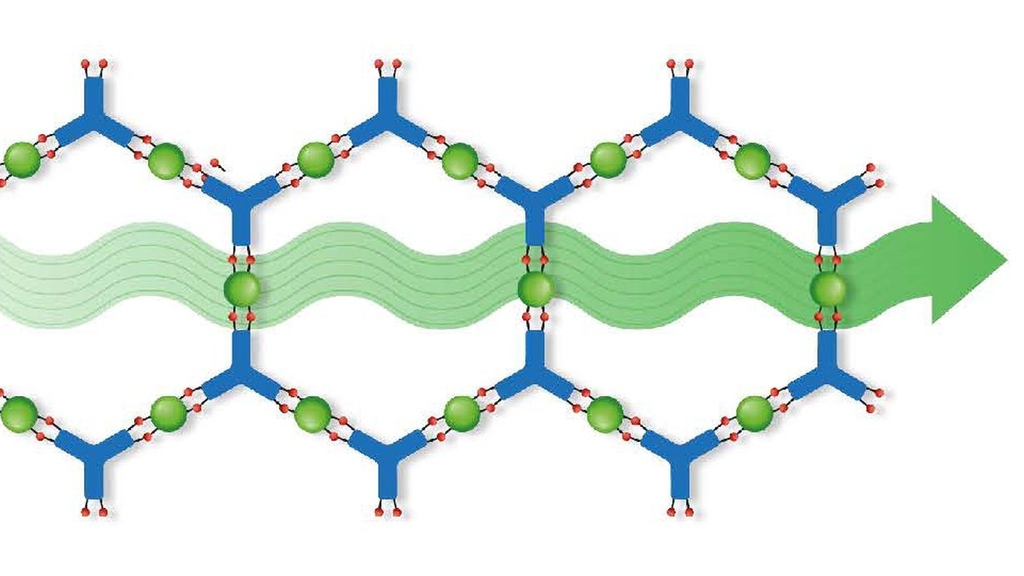
June 06, 2025
Metal-organic frameworks (MOFs) are characterized by high porosity and structural versatility. They have enormous potential, for example for applications in electronics. However, their low electrical conductivity has so far greatly restricted their adoption. Using AI and robot-assisted synthesis in a self-driving laboratory, researchers from Karlsruhe Institute of Technology (KIT), together with colleagues in Germany and Brazil, have now succeeded in producing an MOF thin film that conducts electricity like metals. This opens up new possibilities in electronics and energy storage – from sensors and quantum materials to functional materials. The team reports in the Materials Horizons journal. (DOI: 10.1039/d5mh00813a)
Press Release 045/2025